


Training Concept
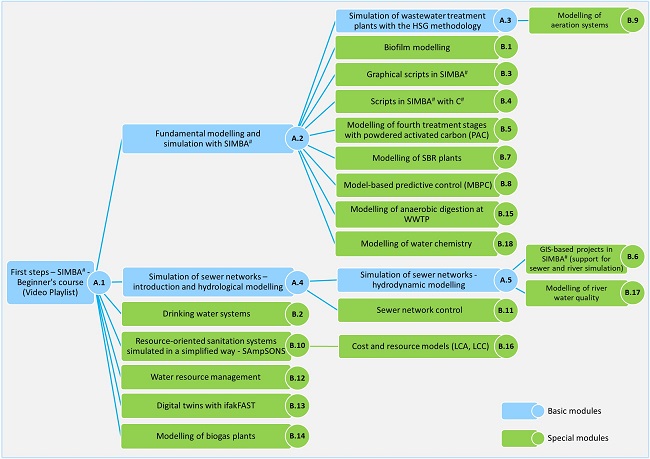
In order to be able to cover the increasingly growing range of topics that can be simulated with SIMBA# in training modules, a new module system has been introduced. Each module contains a four-hour interactive online training session with four to a maximum of six participants. A total of seven basic modules and 20 special modules are offered. There is a registration list for each module. If there are enough interested parties on the module list, an online date search will be conducted and the module will then be held shortly after. The currently scheduled modules are displayed on the website and other interested applicants can still register for them. The price per module is €250 (plus VAT). Once a sufficient number of interested participants have registered on the module list, an online scheduling process is initiated and the module is conducted shortly thereafter. The currently scheduled modules are displayed on the website; additional interested participants may register.
As an alternative to the public online training courses mentioned above, we also offer private training courses for each module, either as on-site sessions (e.g. at our premises in Magdeburg) or as online training. The price for a four-hour training session (online or on-site) is €800 (plus VAT). The training can be tailored to your topics and interests. Additional colleagues may participate at no extra cost.
The modules offered are presented below.
If a topic is missing, please send us an email at sekretariat@ifak-ts.com and we will try to expand the range of modules.
Contact for questions and registration
Contact persons: Mrs Simone Wettig / Ms Janine Buchholz
Tel.: +49 391/ 9901550
- Modules offered and recommended skills
-
- A.1 – First steps – SIMBA# - Beginner's course (Video Playlist)
-
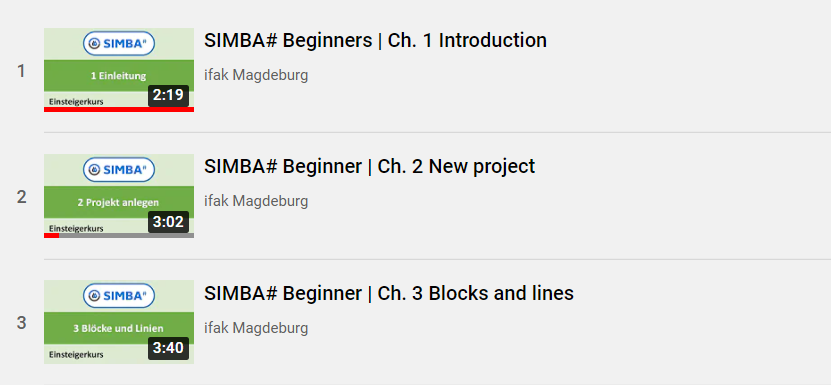
The Beginner’s Course is in the form of a video playlist. The module is available free of charge on YouTube. In short videos, the installation of SIMBA# and first steps for setting up a model and performing simulation experiments are explained.
Before attending online training modules, it is recommended to watch these videos and experiment with SIMBA#. This will ensure that course participants become familiar with the SIMBA# user interface, its operation and functions, which are explained in more detail in the following modules.
Recommended background knowledge:
- None.
- A.2 – Fundamental modelling and simulation with SIMBA#
-
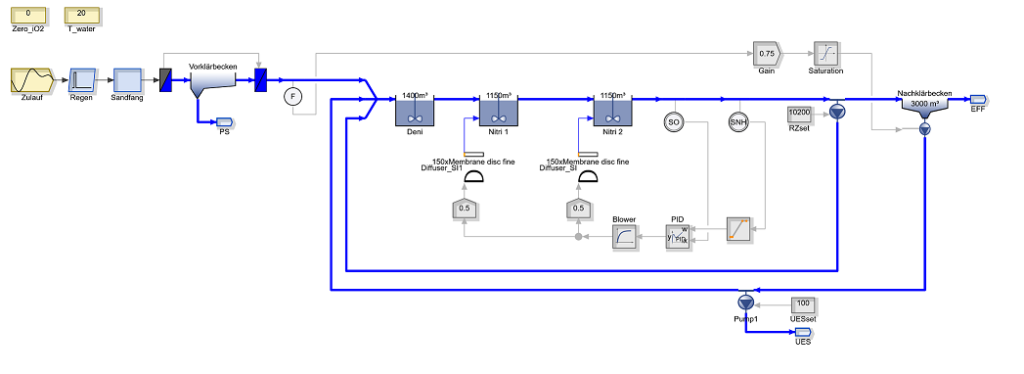
This module teaches the most important and practically established modelling principles of wastewater treatment and introduces the dynamic modelling and simulation of wastewater treatment plants with SIMBA# based on the construction of a simple model of a wastewater treatment plant.
Contents:
- Introduction to the dynamic simulation of wastewater treatment plants: Introduction to the model principles of wastewater treatment
- Introduction to the simulation system SIMBA#
- Structure, simulation and result interpretation of a simple model of a wastewater treatment plant
- Notes on the selection, use and parameterisation of the library modules used
- Tips on appropriate interpretation of the simulation results and common error messages and their correction
- Discussion: Requirements and open questions of the course participants.
Recommended background knowledge:
- A.1 First steps – SIMBA#- Beginner's course (Video Playlist)
- A.3 – Simulation of wastewater treamtent plants with the HSG methodology
-
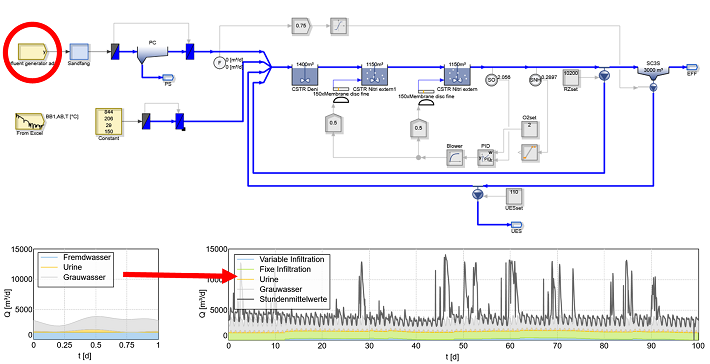
Building on the model that was set up in the fundamentals (A.2) will now be discussed from the perspective of the proposals of the University Simulation Group (HSG) and supplemented using exemplary inflow measurement data.
Contents:
- Relationship between design regulations and simulation
- Handling of measurement data, preparation of measurement data
- Inlet fractionation according to HSG
- Volume flow and load pattern for dry weather according to HSG
- Methods for advanced inflow modelling based on measured data
Recommended background knowledge:
- A.2 Fundamental modelling and simulation with SIMBA#
- A.4 – Simulation of sewer networks – introduction and hydrological modelling
-
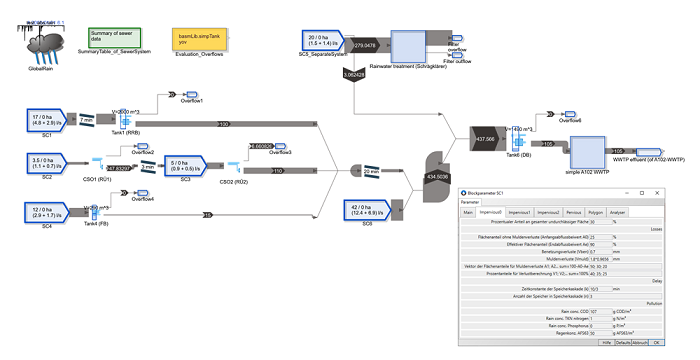
SIMBA# offers a wide range of options for sewer network modelling: hydrological and hydrodynamic modules are available in SIMBA# for runoff simulation; solute transport can, in addition to the conventional stirred tank approach, alternatively also be described with the Lagrangian approach (water packages); for biochemical transformation processes, the flexible model definition via the Petersen-Gujer matrix notation – known from sewage treatment plant simulation – is available.
This training module gives an overview of these approaches and explains how the corresponding SIMBA# modules can be used (and also combined with each other).
In the second part of the module, hydrological channel network simulation and some of its possible applications are discussed in more detail.
Contents:
- Summary introduction: modelling approaches for rainfall-runoff processes, runoff, mass transport and mass transfer in sewer networks.
- Area definitions according to DWA-A102-2 and corresponding simulation
- Use of the (in SIMBA#5) new features of the evaluation block.
- Estimations: Potential of measures such as area disconnection and sewer network control.
Recommended knowledge background:
- A.1 First steps – SIMBA#- Beginner's course (Video Playlist)
- A.5 – Simulation of sewer networks - hydrodynamic modelling
-
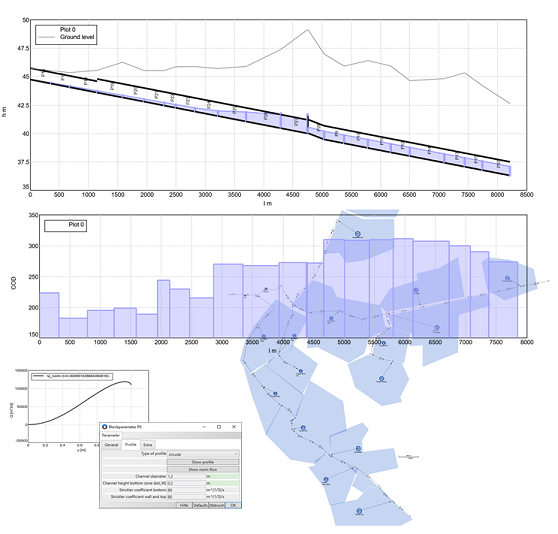
SIMBA# offers a wide range of options for sewer network modelling, including (detailed) hydrodynamic modelling.
This training module gives an overview of the different options for hydrodynamic sewer network simulation in SIMBA# and also introduces the new hydrodynamic block library.
Contents:
- Summary introduction: Hydrodynamic modelling in SIMBA#
- The new hydrodynamic block library (in SIMBA#)
- Area definitions according to DWA-A102-2 and corresponding simulation
- Presentation of the GIS-based example model
- Use of the evaluation and summary table block
Recommended background knowledge:
- A.4 Simulation of sewer networks – introduction and hydrological modelling
- A.6 – Modelling of Resource Flows using the Supply-Library
-

This module introduces the SIMBA# model library “Supply”, which can be used for simplified modelling of water supply systems (drinking water supply, industrial water, cooling water).
Contents:
- Concept of demand-driven models – simple vs. detailed
- Introduction to the Supply Library
- Setup, simulation, and interpretation of results of a simple model of an industrial application (water supply)
- Combination of classical SIMBA flow-routing blocks with demand-driven supply networks
- Visualisation of mass and energy flows using Sankey diagrams
- Modelling the water balance of an industrial facility
- Representation of different water qualities and water streams within one system
- Measures for circular water operation, including recirculation and recycling
- Extension of supply systems using user-defined “converter” blocks
Recommended background knowledge:
- A.2 Fundamental modelling and simulation with SIMBA#
- A.7 – Modelling of Energy Systems and Energy Management
-

Decentralised and local energy management concepts are becoming increasingly important, not only for wastewater treatment plants. The “Dynampere” model library presented in this module enables the modelling of energy generators (CHP units, PV systems, heat pumps), energy consumers (typical demand patterns), storage systems (batteries, hot water storage), electricity distribution networks, grid import and feed-in, hot water networks, heat transfer, and interactions with building energy balances.
Required control strategies and energy management concepts can also be developed and tested within the model.
Contents:
- Introduction to the consumption-driven modelling concept in SIMBA# (Demand)
- Introduction to the Dynampere library
- Modelling of a local energy concept using the example of a single-family house with a PV system and battery, meter and grid feed-in, heat pump and thermal storage, domestic hot water distribution and heating system, electrical and thermal consumers
- Modelling of the corresponding operating concept (energy management)
Recommended background knowledge:
- A.1 First steps – SIMBA#- Beginner's course (Video Playlist)
- Modelling of energy systems and energy management at WWTP
-
Decentralised and local energy management concepts are also becoming increasingly important at wastewater treatment plants. The 'Dynampere' model library, which is presented in this course module, can be used to model energy generators (CHP, PV, heat pumps), energy consumers (typical patterns), storage (batteries, hot water), distribution via electricity grids, procurement and feed-in to the grid, and heat transfer. The necessary control and energy management concepts can also be developed and tested using the model..
Contents:
- Introduction to the demand-driven modelling concept in SIMBA#(Demand)
- Introduction to the Dynampere library
- Modelling an energy concept for a wastewater treatment plant with CHP and gas storage, PV system and battery, meters and grid feed-in, heat recovery from effluent and heat storage, electricity and heat consumers
- Modelling a corresponding operating concept (energy management)
Recommended background knowledge:
- A.1 First steps – SIMBA#- Beginner's course (Video Playlist)
- B.1 – Biofilm modelling
-
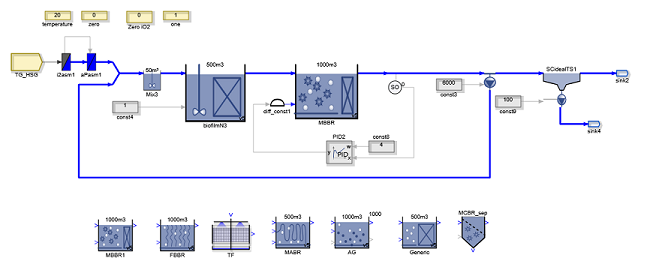 .
.The SIMBA# biofilm library is presented in the training module. The library can be used to model wastewater processes with biomass adhering to growth bodies. This includes:
- Trickling filter plants
- Biofilters with different growth bodies (clay material, sludge material, plastic bodies)
- Combined systems of activated sludge and growth bodies (IFAS), e.g. textile materials
- Membrane aerated biofilm systems (MABR)
- Aerobic / anaerobic granules
- GAC filters
Contents:
- Basics of biofilm modelling
- Application of the general biofilm block
- Example trickling filter
- Example IFAS system
- Outlook on systems with growth bodies transported in the system, MABR and granula systems
Recommend background knowledge:
- A.2 Fundamental modelling and simulation with SIMBA#
- B.2 – Drinking water systems
-
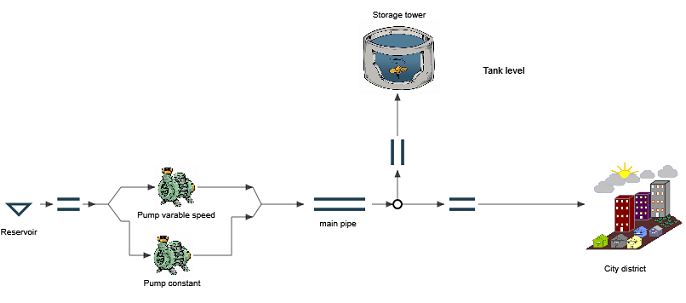
In this module, the concepts implemented in SIMBA# for modelling pipeline networks are presented. The corresponding model library can be used to simulate pressures and flows and mass transport in fully filled pipeline networks. This library is suitable for modelling
- Drinking water systems
- Wastewater pressure pipelines
- Pumped wastewater transport in sewage treatment plants
- Service water systems
Contents:
- Introduction to the pressurised piping library
- Basics of modelling pressure pipelines, solution approach from EPANET
- Model aspects of pressure-dependent consumption (PDD) and leakages
- Model basics mass transport (advection-dispersion)
- Example drinking water system
- Example pump design
Recommended background knowledge:
- A.1 First steps – SIMBA# - Beginner's course (Video Playlist)
- B.3 – Graphical scripts in SIMBA#
-
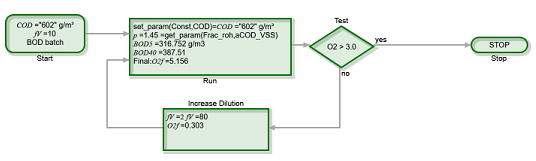
This module introduces the writing of scripts in SIMBA#. Scripts can be used to automate the execution of simulation studies, e.g. by automatically analysing parameter variations or dimensioning a plant. The scripts can be configured via dialogue as well as programmed in C#. In this module, the first variant – configuration via dialogue – is introduced.
Contents:
- Actions, conditions and sequences
- Global and local variables
- Interaction with a model
- Structure of an example model: KA design
- Flowcharts
Recommended knowledge background:
- A.2 Fundamental modelling and simulation with SIMBA#
- B.4 – Scripts in SIMBA# with C#
-
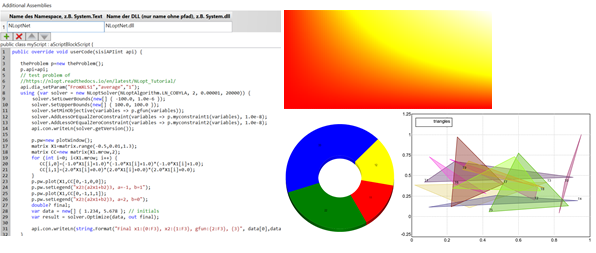
This module introduces the writing of C# based scripts in SIMBA#. Scripts can be used to automate the execution of simulation studies, e.g. by automatically analysing parameter variations or dimensioning a plant. The scripts can be configured via dialogue as well as programmed in C#. In this module, the second variant - programming in C# - is introduced.
Contents:
- Introduction to C# scripts, important classes
- Results output in the console
- Access to model and simulation results
- Generation of result diagrams
- Numerical calculations: Sensitivity, calibration, optimisation
Recommended knowledge background:
- A.2 Fundamental modelling and simulation with SIMBA#
- B.5 – Modelling of fourth treatment stages with powdered activated carbon (PAC)
-
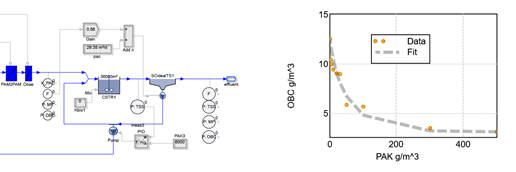
For the removal of micropollutants, the processes adsorption on activated carbon or/and ozonation became established. Since version 4.0, powder activated carbon adsorption models are included in SIMBA#. In this module the use of this model is presented.
Contents:
- Model basics for adsorption
- The SIMBA# model PAM (Pulverised Activated Carbon Model)
- Model calibration (carbon and wastewater matrix)
- Example model (Ulm method)
- Outlook, other processes, GAK
Recommended background knowledge:
- A.2 Fundamental modelling and simulation with SIMBA#
- B.6 – GIS-based projects in SIMBA# (support for sewer and river simulation)
-
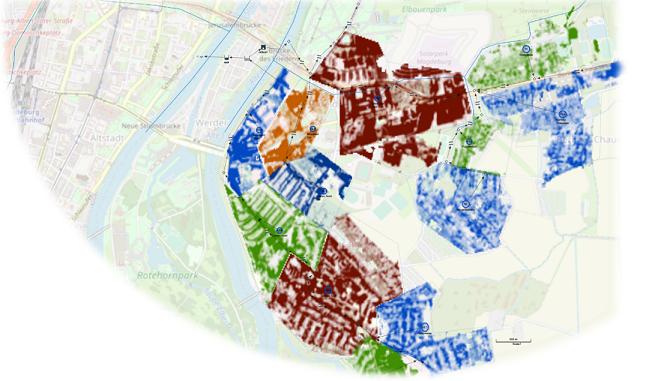
With version 5.0, SIMBA# also supports a map- or GIS-based graphical representation of models in addition to flowsheet-based modelling. This type of representation is particularly suitable for modelling sewer networks, drinking water networks, river basins.
Contents:
- Projection settings
- Display of bitmaps and ESRI shape files
- Use of digital elevation model
- Example model sewer network
Recommended background knowledge:
- A.4 Simulation of sewer networks – introduction and hydrological modelling
- A.5 Simulation of sewer networks - hydrodynamic modelling
- B.7 – Modelling of SBR plants
-
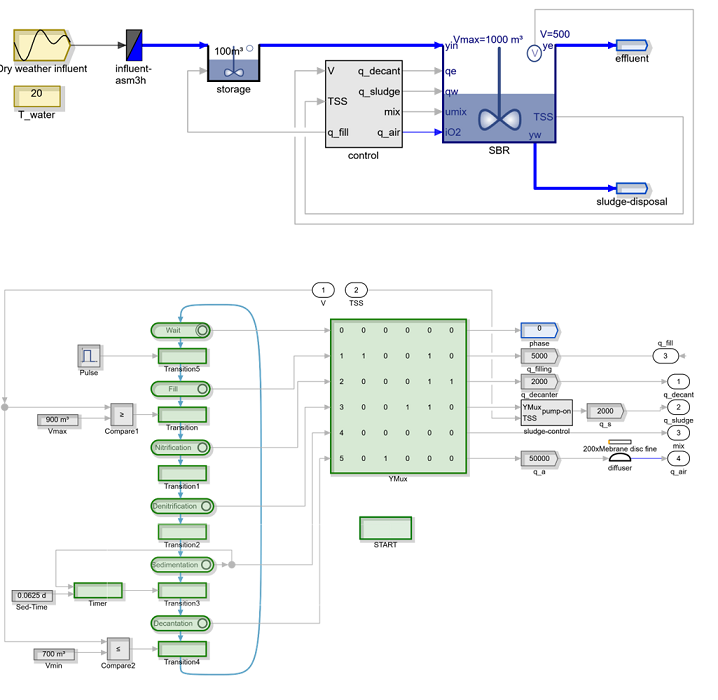
The often complex control of SBR wastewater treatment plants can be modelled in detail with SIMBA#. In this training module, a control system is modelled for the SBR module from the wastewater library, in which the following aspects are considered:The often complex control of SBR wastewater treatment plants can be modelled in detail with SIMBA#. In this training module, a control system is modelled for the SBR module from the wastewater library, in which the following aspects are considered:
- Basics of SBR operation
- Properties of the SBR module
- Control with Petri net
- Control with IEC code (Structured Text, IEC 61131-3)
Recommended background knowledge:
- A.2 Fundamental modelling and simulation with SIMBA#
- B.8 – Model-based predictive control (MBPC)
-
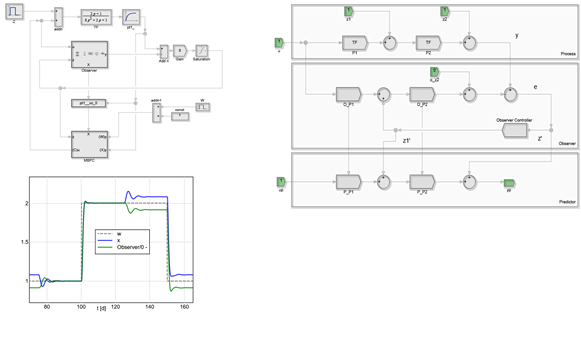
Model-based controllers use an internal simulation model (digital twin) of the system which is to be controlled in order to simulate the future behaviour, formulate an optimal control result (quality function) and use a mathematical optimisation algorithm to calculate the manipulated variables. SIMBA# includes an MBPC library that allows any user to design their own model-based controllers. With the tool ifakFAST this controller can also be connected to real systems.
Contents:
- Basics of model-based predictive control (MBPC)
- Example model single loop control (SISO)
- Example model of two-size control
- Prospects for process controllers in sewage treatment plants
Recommended background knowledge:
- A.1 First steps – SIMBA# - Beginner's course (Video Playlist)
- B.9 – Modelling of aeration systems
-
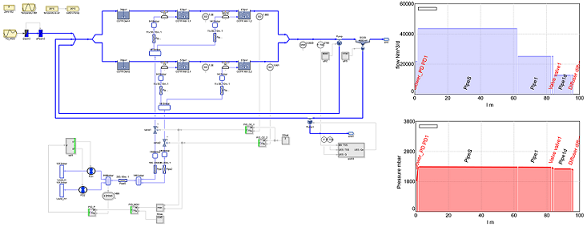
The function of aeration systems is crucial for wastewater treatment plants. Since aeration systems consist of many components (blowers, aerators, pipes, valves, MSR), the analysis of real plants is time-consuming. If models of aeration systems are considered integrated with models of wastewater treatment, analyses can be significantly accelerated.
Contents:
- Detailed models of aeration systems
- Model blocks aerator, piping, boundary conditions, valves/valves, blowers
- Validation of aeration system models
- Control of aeration systems
- Implementation of constant pressure control, sliding pressure control, air distribution control
Recommended background knowledge:
- A.2 Fundamental modelling and simulation with SIMBA#
- B.10 – Resource-oriented sanitation systems simulated in a simplified way - SAmpSONS
-
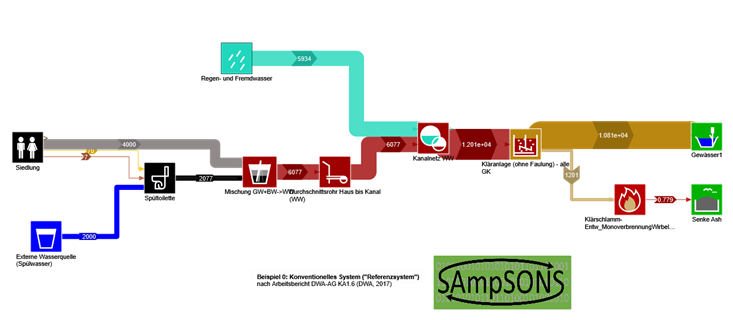
SAmpSONS is a free tool for the approximate determination and visualisation of material flows (including nitrogen, phosphorus, trace substances, pharmaceutical residues) in resource-oriented sanitation systems (ROSS) and their simplified life cycle assessment.
This training module gives a short introduction to the use of this tool, but also explains how the user can integrate it into SIMBA# with a few simple steps and thus has considerably extended possibilities of use (dynamic simulation, modification of SAmpSONS blocks, creation of own modules) of SAmpSONS.
Contents:
- Summary introduction to the use of SAmpSONS
- Representation of material and resource flows
- Integration of SAmpSONS in Simba#
- Creating own modules, adding further sustainability criteria
- (Rough) sustainability assessment of sanitation and wastewater systems
Recommended background knowledge:
- A.1 First steps – SIMBA# - Beginner's course (Video Playlist)
- SAmpSONS online tutorial: www.youtube.com/watch?v=uxnsHmMQtIM
- B.11 – Sewer network control
-
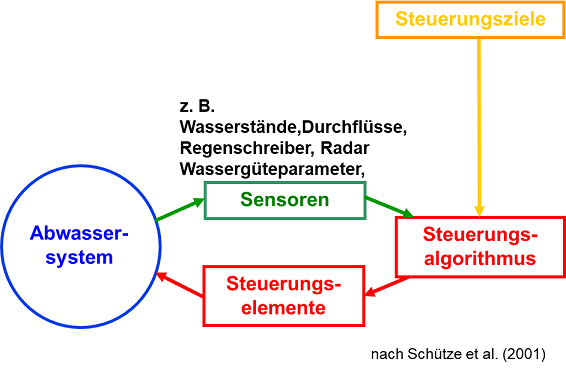
For many sewer networks, sewer network control is a possible measure to increase the performance of the sewer network at low infrastructure costs. Increasing the performance and flexibility of the essentially static system "sewer network" can also help to better respond to the challenges of climate change. Three approaches are available for designing and describing sewer network controls: (1) formulation of if-then rules, possibly as fuzzy rules, (2) concept of generalised hierarchical controllers, (3) model-predictive control. In SIMBA# all these approaches can be considered for development, simulation and implementation of a channel network control.
The training module gives an introduction to the basic concepts of sewer network control and explains their application. Finally, hints for practical implementation, e.g. with the open-source tool ifakFAST (Framework for Integrated Automation and Simulation Technologies), are given.
Contents:
- Terms and objectives of sewer network control
- Overview of DWA materials M 180 and thematic volume "Drainage Control"
- Implementation in SIMBA#: rule-based systems; generalised controllers; model predictive control
- Practical implementation with ifakFAST
Recommend background knowledge:
- A.1 First steps – SIMBA# - Beginner's course (Video Playlist)
- A.4 Simulation of sewer networks – introduction and hydrological modelling
- B.12 – Water resource management
-
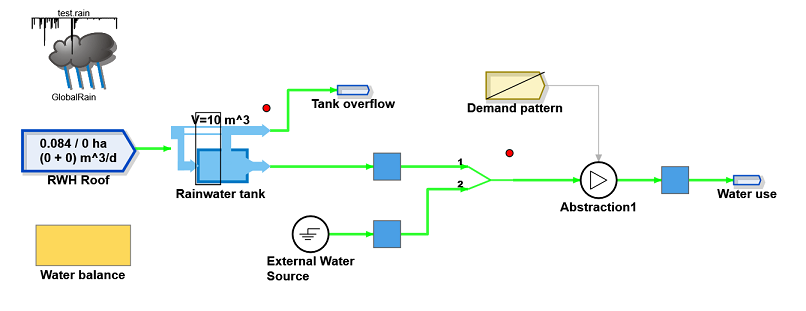
The management of water resources (supply - demand) plays a role in many fields of application, for example the use of rainwater, treated greywater or industrial process water. The - rather less known - SIMBA# libraries SUPPLY and NEXUS are available for this purpose. In this course, the use of the modules of these libraries is illustrated with some examples.
Contents:
- Definition of water uses: demand prioritised, demand proportional.
- Interconnection of blocks to communicate water demands and supplies
- Demand-driven use of storage reservoirs
- Application examples: Rainwater harvesting, greywater reuse.
- Nexus models: Integration of different, interacting material flows - e.g. water, energy, food ("WEF nexus" models).
- Creation of shit flow diagrams (GIZ/SuSanA)
Recommended background knowledge:
- A.1 First steps – SIMBA# - Beginner's course (Video Playlist)
- B.13 – Digital twins with ifakFAST
-
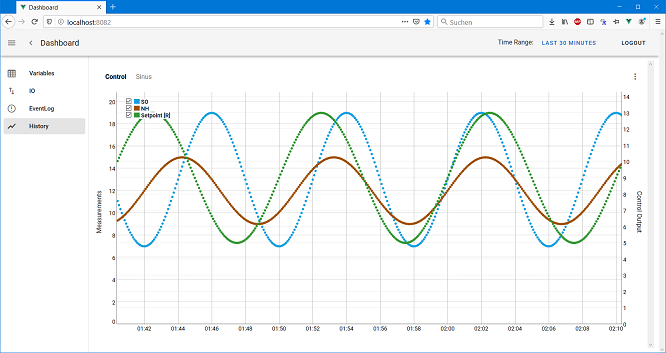
The open platform ifakFAST (Framework for Integrated Automation and Simulation Technologies) is intended to support the realisation of solutions aimed at monitoring and optimising the operation of technical processes. The application focus here is in the area of water management plants and processes, especially wastewater treatment plants. The ifakFAST platform has been available as open source since 2019 (https://fast.ifak.eu) and is particularly suitable for the practical realisation of model-based monitoring and control concepts with SIMBA# ("digital twin").
Contents:
- Presentation of the software platform ifakFAST
- Demonstration of the most important functions
- Communication link to the process for data exchange
- Web-based dashboard with visualisation functions and alarm management
- Realisation of calculations, e.g. for the implementation of controllers in the form of C#-based scripts and SIMBA# models
- Use of SIMBA# and ifakFAST for virtual commissioning
Recommended background knowledge:
- A.1 First steps – SIMBA# - Beginner's course (Video Playlist)
- B.14 – Modelling of biogas plants
-
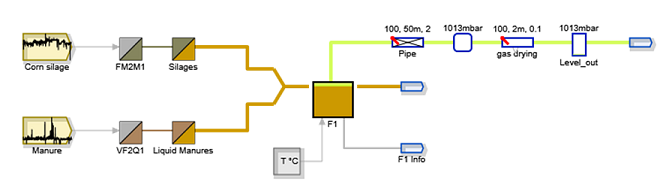
Gas production in biogas plants is based on complex biochemical processes. Due to the long generation times of the biomass, measures to improve operational management can hardly be evaluated in the real process. Models can provide assistance here in order to evaluate measures (e.g. substrate change) within the framework of virtual experiments with regard to their short and long-term effects.
Contents:
- Presentation of anaerobic biochemical model principles
- Model blocks fermenter, modelling of substrates
- Construction of an example model
- Coupling with gas system
- Control/regulation of feeding
- Limits of application
Recommended background knowledge:
- A.1 First steps – SIMBA# - Beginner's course (Video Playlist)
- SIMBA# Biogas (video tutorial): http://www.youtube.com/playlist?list=PLz-apvyQwQ-QFimdr8bLY9dJsNIL1FRYY
- B.15 – Modelling of anaerobic digestion at WWTP
-
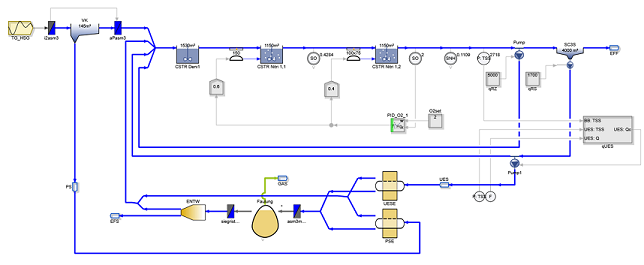
Anaerobic sludge digestion is an important process engineering component at wastewater treatment plants. Measures in the section of activated sludge treatment have an impact, albeit with a delay, on sludge digestion and backloading by process water, among other things. This also applies to measures in the sludge treatment section. Models can be used to represent and investigate these reciprocal relationships.
Contents:
- Presentation of anaerobic biochemical model principles
- Model blocks digestion, thickening, dewatering
- Coupling with the activated sludge section
- Control/regulation of process water dosing
- Consideration of co-digestion
Recommended background knowledge:
- A.2 Fundamental modelling and simulation with SIMBA#
- B.16 – Cost and resource models (LCA, LCC)
-
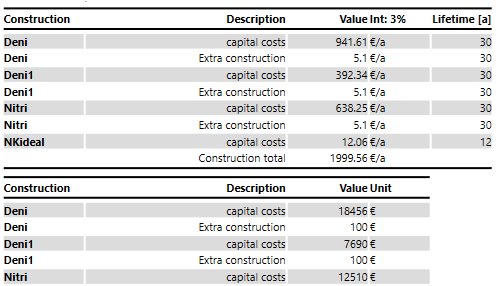
The assessment of water systems usually also includes the estimation of life cycle costs (LCC) as well as impacts with regard to defined environmental indicators (e.g. greenhouse gas emissions, primary energy demand, etc.) (LCA). Here, costs and impacts from construction/material requirements as well as from ongoing operation are to be taken into account. SIMBA# offers the option to extend the simulation modules with LCC/LCA evaluation modules that perform these evaluations "on the fly" during the simulation.
This course module introduces the use of the LCA/LCA modules and the definition of the corresponding parameters and calculation rules.
Contents:
- Basics of life cycle analysis and life cycle costs (LCA, LCC)
- Calculation basics, midpoint file of environmental indicators
- Definition of corresponding evaluation scripts
Recommended background knowledge:
- A.1 First steps – SIMBA# - Beginner's course (Video Playlist)
- B.10 Resource-oriented sanitation systems simulated in a simplified way - SAmpSONS
- B.17 – Modelling of river water quality
-
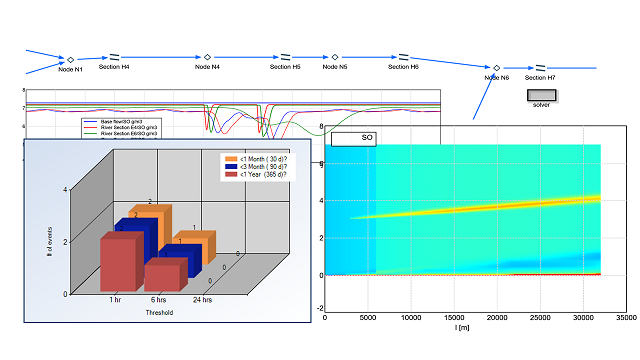
SIMBA# also allows the modelling of discharges (hydrological and hydrodynamic) and of biochemical transformation processes in rivers. Thus, SIMBA# can also be used to create models of river water quality. Water quality simulation can play an important role, particularly with regard to the assessment of the effects of discharges from sewer networks and sewage treatment plants, especially with regard to dissolved oxygen and nitrogen (NH3, NH4). Evaluation routines allow the assessment of water quality using the recurrence-duration limits of the British "Urban Pollution Management" manual (similar also in the BWK approach).
This training module explains how both hydrological and hydrodynamic water quality models can be built in SIMBA#, extended by any biochemical transformation models and then applied.
Contents:
- Basics of biochemical processes in rivers and streams
- Hydrological modelling of water bodies in SIMBA#
- Hydrodynamic modelling of water bodies in SIMBA#
- Predefined water quality models in SIMBA#: SWQM, rWQM (IWA)
- Assessment of water quality according to criteria of UPM and BWK
Recommended background knowledge:
- A.1 First steps – SIMBA# - Beginner's course (Video Playlist)
- A.4 Simulation of sewer networks – introduction and hydrological modelling
- A.5 Simulation of sewer networks - hydrodynamic modelling
- B.18 – Modelling of water chemistry
-
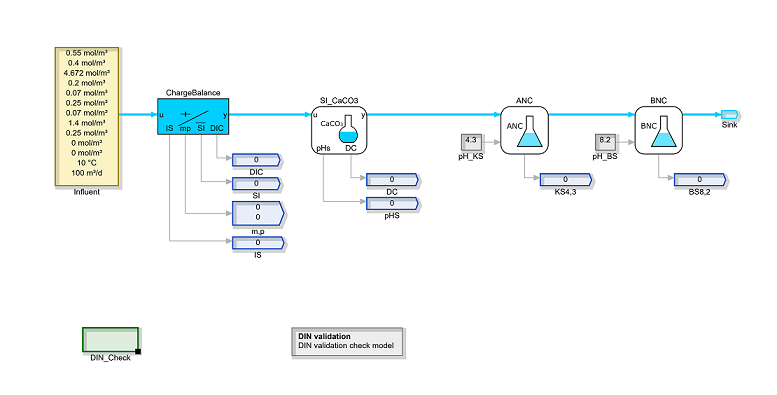
In the training module, the possibilities for modelling water chemical equilibrium reactions with SIMBA# are explained. These are suitable for modelling
- Drinking water treatment
- process water systems
Contents:
- Introduction to the water chemistry library of SIMBA#
- Calculation of pH value, acid and base capacity, calcite solubility
- Solving algebraic equation systems with SIMBA#
- Import of data from the PhreeqC databases
- Example: Charge balance correction and analysis according to DIN 38404-10:2012-12 (1) and DIN 38402-62 (2014)
- Example: Adjustment of calcite solubility by mixing waters
Recommended background knowledge:
- A.1 First steps – SIMBA# - Beginner's course (Video Playlist)
- A.2 Fundamental modelling and simulation with SIMBA#
- B19 – Hydraulic Calculation of Wastewater Treatment Plants
-


Hydraulic design plays a central role in the dimensioning of wastewater treatment plants - particularly under fluctuating wastewater flows and complex operating conditions. With SIMBA#, wastewater treatment plant hydraulics can be modelled and simulated both under steady-state and dynamic conditions.
This training module provides a practice-oriented introduction to the hydraulic modelling and simulation of wastewater treatment plants. Participants use the SIMBA# hydraulic library to build a simple hydraulic model, carry out simulations, and jointly evaluate the results—including concrete guidance on parameterisation and interpretation of results.
Contents:
- Introduction to hydraulic calculation of wastewater treatment plants: modelling approaches, calculation methods, fundamentals of hydraulic processes
- Introduction to the SIMBA# simulation system and the hydraulic library
- Setup, simulation, and evaluation of a simple hydraulic wastewater treatment plant model
- Selection and parameterisation of library modules
- Interpretation of simulation results: typical questions
- Discussion: requirements and questions of the participants
Recommended background knowledge:
- A.1 First steps – SIMBA#- Beginner's course (Video Playlist)
- B20 – Energy Check and Energy Analysis of Wastewater Treatment Plants
-

Against the background of increasing requirements for energy efficiency and climate protection, the energetic optimisation of wastewater treatment plants is becoming increasingly important. The DWA-A216 worksheet provides a structured framework for this purpose. In this training module, participants learn how the energy flows of a wastewater treatment plant can be modelled, simulated, and evaluated using SIMBA#.
This training module provides an introduction to the fundamentals of energy checks and energy analysis according to DWA-A216 and conveys a practice-oriented approach to working with the SIMBA# Energy Check Library. Using a simple wastewater treatment plant model, the key steps of an energy analysis - from modelling and simulation to energetic evaluation and interpretation of the results - are demonstrated.
Contents:
- Introduction to energy analysis of wastewater treatment plants: fundamentals of the energy check and energy analysis in accordance with DWA-A216
- Introduction to the SIMBA# simulation system and the energy check library
- Setup of a simple energy balance model and creation of a Sankey diagram
- Selection and parameterisation of library modules
- Coupling of a process model with the energy model
- Interpretation of simulation results: typical questions
- Discussion: requirements and questions of the participants
Recommended background knowledge:
- A.1 First steps – SIMBA#- Beginner's course (Video Playlist)